
About the Governance and Justice Group
The Governance and Justice Group (GJG) was founded in 2009 – inspired by the work and vision of the late Ahmed Othmani (co-founder and former president of Penal Reform International) – as a free association of individual practitioners who share a common purpose based on the preamble to the United Nations Universal Declaration of Human Rights, namely that: ‘it is essential if man is not to be compelled to have recourse, as a last resort, to rebellion against tyranny and oppression, that human rights should be protected by the rule of law…’.
Our work focuses on the administration of criminal justice because it is, as Cherif Bassiouni put it, ‘the field of battle in which democracy and human rights are tested … [and] encompasses all processes and practices by which a state affects, curtails, or removes basic rights.’
Our Approach
Upon invitation, we offer support to governments, institutions and others who seek to apply the principles embedded in UN Conventions to the practical context of their own country. Our work is context specific and solution-oriented directed at ensuring ordinary people (and particularly those on the margins of society) have a voice and are able to apply to the law to exercise their rights.
We have learned that the problems affecting justice systems the world over are common, though they may differ in degree: justice as a sector is messy (highly political and involves multiple service providers / institutions reporting to different line ministries). Weak co-ordination affects the way the system functions causing long case backlogs and overcrowding in prisons.
Our approach is grounded in evidence: what is the real situation and how might it be improved.
We bring a body of collective experience of what has worked in other countries and link people to the practitioners who have innovated them.
How the GJG works
As a free association, the GJG identifies and brings together world-class practitioners to help develop solutions to practical problems arising in the administration of criminal justice.
The group is managed lightly by three directors who are based in various locations around the world. The GJG works with governments, inter-governmental and non-governmental organisations as well as a range of international development agencies and several universities. (For a current list of active practitioners working with the GJG please see the 'Associates' link in the menu above.)
The GJG is registered as a private limited company in the United Kingdom.
The cumulative experience of the GJG Directors and Associates has refined our methodology and approach to addressing the problems affecting justice systems across the globe. While the GJG offers an array of different services, reflecting the wealth of experience and specialisation wielded by the Associates, we specialise in the provision of four distinct Justice Audit options with Justice Mapping (USA).
JUSTICE AUDIT OPTIONS | The GJG offer different strategies depending upon the needs and circumstances of a government.
The Justice Audit is an in-depth examination of how a national justice system is functioning and identifies key areas for targeted intervention and improvement.
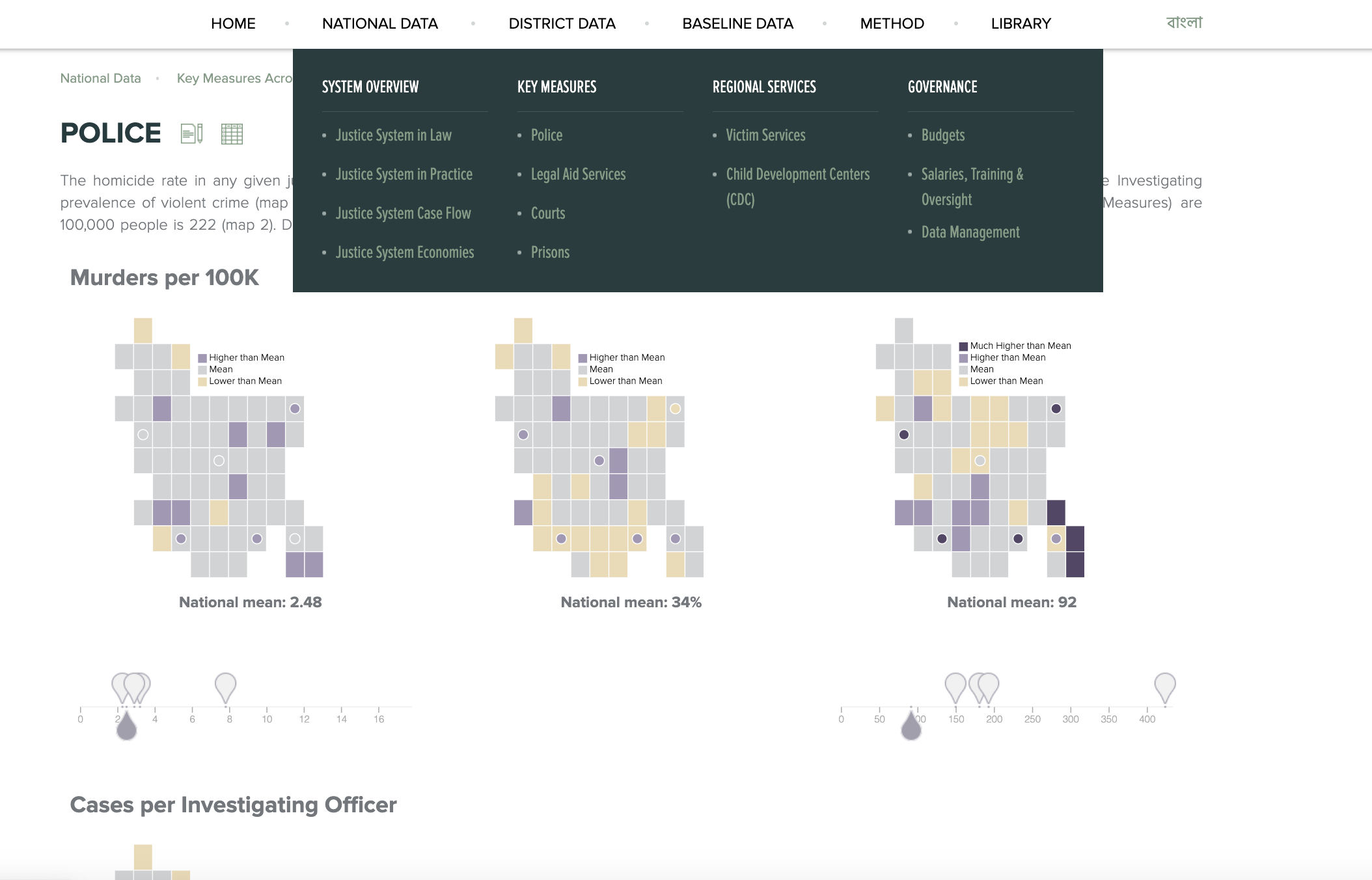
The Justice Snapshot depicts how a country’s justice system functions after a conflict or disaster and provides a matrix of actions in support of early recovery.
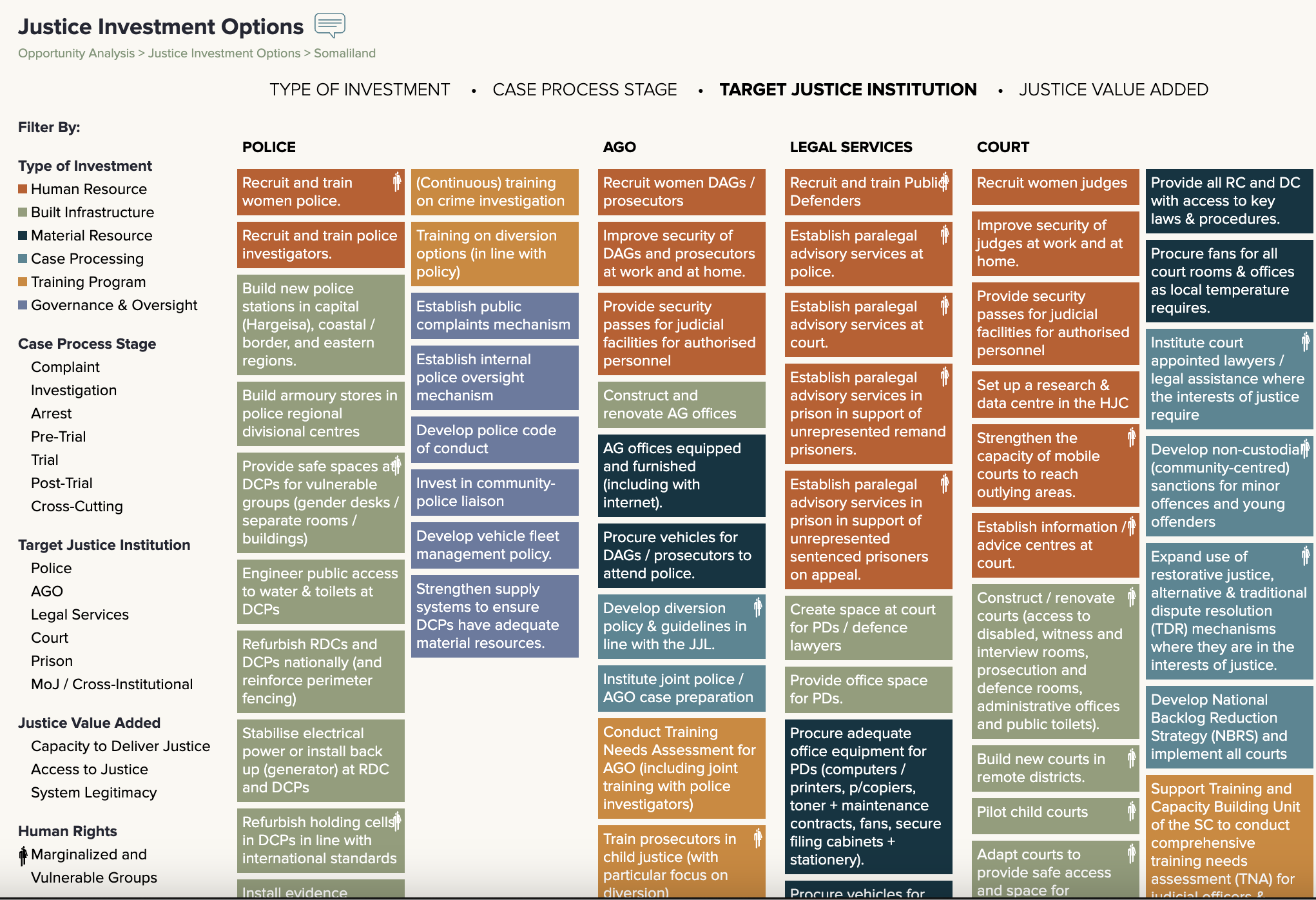
The Court Audit dives deep into case data to filter and clear backlogged cases clogging up the courts by way of targeted Case Management Orders.

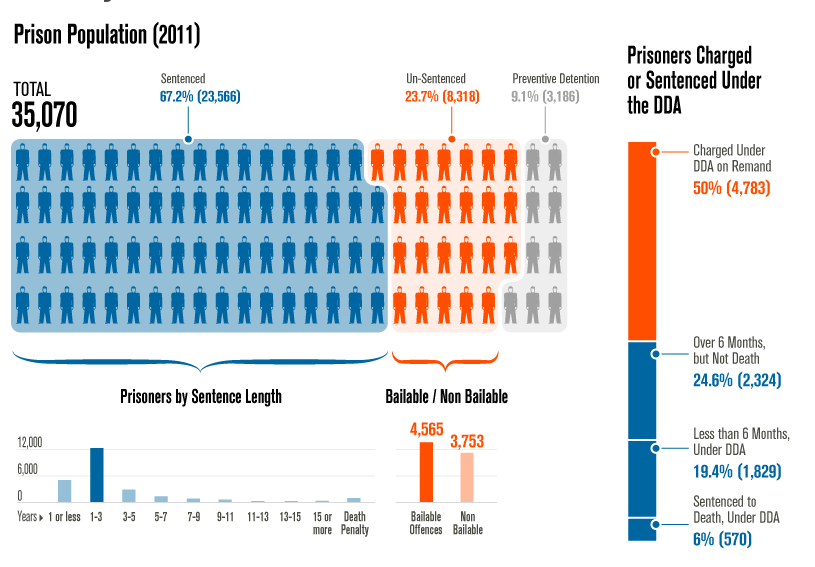
The Prison Audit tackles prison overcrowding, both in advance through early warning systems and by identifying existing prisoners eligible for release and referring them to the courts.
Contact the GJG
You can write a message to us by using the contact form below. We will make sure to respond to you as soon as possible.
You can also contact the GJG using the details below:
The Governance and Justice Group
48 Russell Hill, Purley
Surrey CR8 2JA
United Kingdom
Tel: +44 0208 6602182
Email: info@governancejustice.org